If someone told Trey Travis five years ago he’d be walking the floor of a supercomputing show, he wouldn’t have believed them. Today, however, the rapid rise of artificial intelligence is reshaping industries far beyond technology itself.
Georgia-based Southeastern Hose, where Travis serves as VP of operations, manufactures corrugated metal hoses and has traditionally catered to sectors such as steel and petrochemicals. These specialized hoses, however, have found a new and unexpected application in the booming data center market, where they are used for cooling and exhaust systems.
As AI adoption accelerated and companies rushed to build new data centers, demand for these products started as a steady stream before quickly turning into a flood. The pace of growth intensified last year and has continued to climb since the beginning of this year.
AI-Driven Data Center Expansion Creates New Manufacturing Demand
Southeastern Hose is one of many manufacturers, both large and small, capitalizing on the surge in data center construction. At a time when industries such as wood, coal, petroleum, and food and beverage are experiencing slowdowns, AI infrastructure is opening up new revenue streams for industrial suppliers.
Conversations with several companies, along with publicly available industry reports, reveal exponential business growth and double-digit revenue increases as demand for data center infrastructure continues to rise. Some manufacturers are even creating dedicated business divisions specifically to serve data center customers.
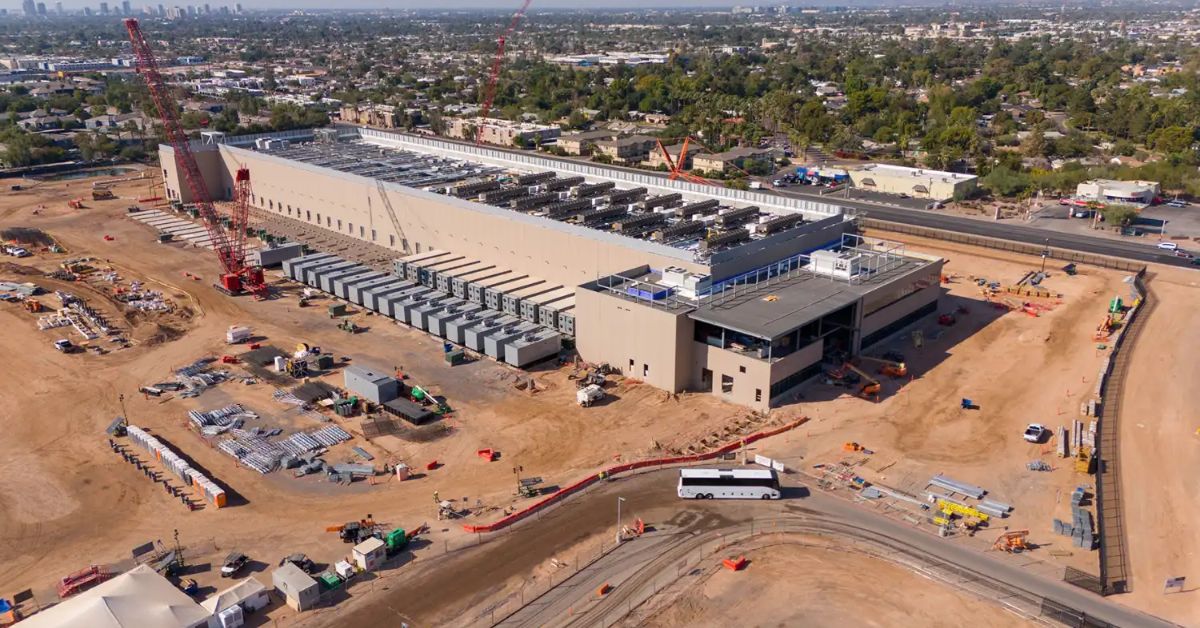
Spending on data center construction has tripled over the past three years, while occupancy rates for third-party leased data centers remain close to historic highs, according to Goldman Sachs Research. The combination of AI expansion and cloud computing demand is driving unprecedented investment across the sector.
Travis said Southeastern Hose saw revenue grow by around 25% last year. This year, the company could achieve growth of nearly 40%, with roughly two-thirds of its overall revenue now coming directly from the data center market.
Rising Investments Bring Operational and Financial Challenges
Although manufacturers are benefiting from the AI-fueled construction boom, keeping up with demand is not without obstacles. Expanding production capacity requires major investments in facilities, equipment, and technology, creating financial pressure for many businesses.
Bill Pellino, national leader of BDO’s manufacturing practice, noted that these large capital expenditures can significantly impact cash flow. Companies must carefully balance growth opportunities with the financial realities of scaling their operations.
At the same time, manufacturers are facing a tight labor market, higher energy costs, and the uncertainty of making long-term business decisions in a rapidly evolving environment. The future pace of AI and data center development remains difficult to predict, adding another layer of complexity.
Despite these challenges, many suppliers see the current market as a once-in-a-generation opportunity, encouraging them to invest aggressively in expanding their capabilities and securing long-term contracts.
Read : Dynamic Pricing and Non-Refundable Trips Reshape Travel
Data Centers and AI Become a Boon for American Manufacturing
The impact of AI infrastructure extends well beyond individual manufacturers. Darrell West, senior fellow at the Center for Technology Innovation at the Brookings Institution, described the growth of AI and data centers as “a boon for American manufacturing.”
The ongoing construction wave is increasing demand across a wide range of sectors, from industrial equipment and cooling technologies to electrical systems and advanced materials. The semiconductor industry, in particular, is experiencing significant gains, with chipmakers reporting double-digit increases in sales.
As businesses race to build the digital infrastructure needed to support AI applications, manufacturers across the supply chain are finding themselves at the center of a historic industrial transformation. What was once a niche market for a handful of suppliers has become a major economic driver, creating new jobs, boosting revenues, and reshaping the future of American manufacturing.
For companies like Southeastern Hose, the AI revolution is proving that even traditional industrial businesses can play a critical role in powering the next generation of technology.