After decades of using robots, predictive analytics, and machine learning, manufacturers across the United States are now exploring more advanced AI systems. These tools are helping businesses automate operations with minimal human intervention.
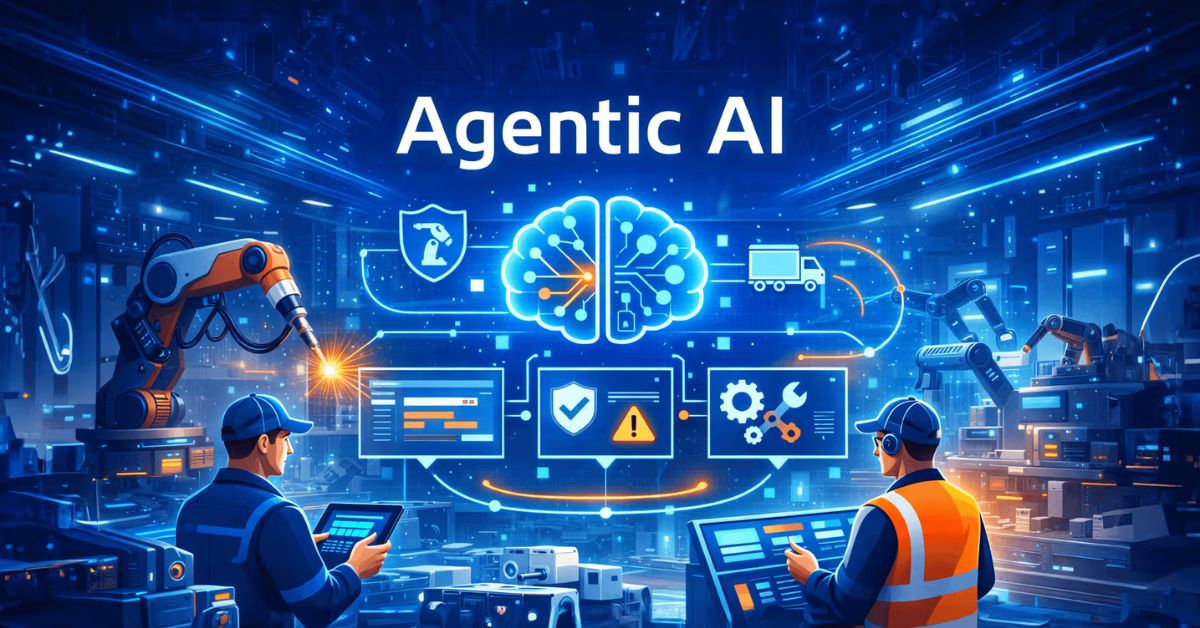
Unlike traditional AI systems, agentic AI goes beyond analyzing data and answering questions. It can autonomously plan, reason, and coordinate actions across systems to execute workflows efficiently.
For example, older AI models might only predict machine failure. Agentic AI can identify the issue, schedule maintenance, order replacement parts, update production schedules, and notify teams automatically.
This level of automation is pushing manufacturers toward smarter and more self-sufficient production environments.
Manufacturing Industry Accelerates AI Adoption
Recent surveys show that manufacturers are actively building their AI capabilities. According to Deloitte, 87% of manufacturers surveyed had already launched at least one generative AI pilot.
This shift allows manufacturers to move beyond simple troubleshooting and toward self-optimizing systems powered by agentic AI. Experts say the focus is no longer on whether AI matters, but how fast companies can scale it.
Another Deloitte report predicted that 25% of companies using generative AI would launch agentic AI pilots in 2025. That number is expected to grow to 50% by 2027.
These numbers highlight strong momentum, but widespread adoption still depends on overcoming key technical challenges.
Infrastructure Challenges Slow Agentic AI Growth
Despite growing interest, many manufacturers lack the infrastructure needed for large-scale agentic AI deployment. Data quality, integration, and system compatibility remain major barriers.
According to Deloitte’s 2026 State of AI report, nearly three in four companies plan to deploy agentic AI within two years. However, only one in five currently has the right infrastructure in place.
Gartner projected that over 40% of agentic AI projects may be abandoned by 2027. The main reasons include unclear business value, rising costs, and implementation difficulties.
In manufacturing, these risks are even greater because errors from autonomous systems can disrupt production and create serious safety concerns.
Read : Why Physical AI 2.0 Needs a Reality Check Now ?
Data Readiness Is Key to Successful Deployment
Brian Sathianathan, co-founder of Iterate.ai, said large manufacturers in sectors like automotive and aerospace are leading adoption. These companies already have strong AI foundations and data infrastructure.
However, many U.S. manufacturers are starting from a more difficult position. Siloed systems and disconnected data create major obstacles for agentic AI deployment.
Chandra Surbhat of Altimetrik explained that agentic AI performs best with clean, consistent, and reliable historical data. Without this foundation, autonomous decision-making becomes difficult.
Manufacturers are beginning to address this challenge. Deloitte’s 2025 report found that 40% of surveyed manufacturers plan to invest in data analytics over the next two years.