Sodium-ion battery technology continues to gain momentum as energy storage companies introduce new products for utilities and large-scale projects. Recent developments suggest growing confidence in sodium-based batteries as an alternative to conventional lithium-ion systems.
Colorado-based Peak Energy recently announced plans to deliver up to 4.75 GWh of sodium-ion batteries to Jupiter Power by 2030. The company also partnered with General Motors to support stationary energy storage and plans to build a 4-GWh manufacturing facility in Sacramento, California.
Meanwhile, Oregon-based ESS Tech has attracted more than $1 billion in early-stage customer opportunities after announcing an agreement to procure 8.5 GWh of sodium-ion battery cells and modules from Alsym Energy. The company continues expanding its presence in the short- and medium-duration energy storage market.
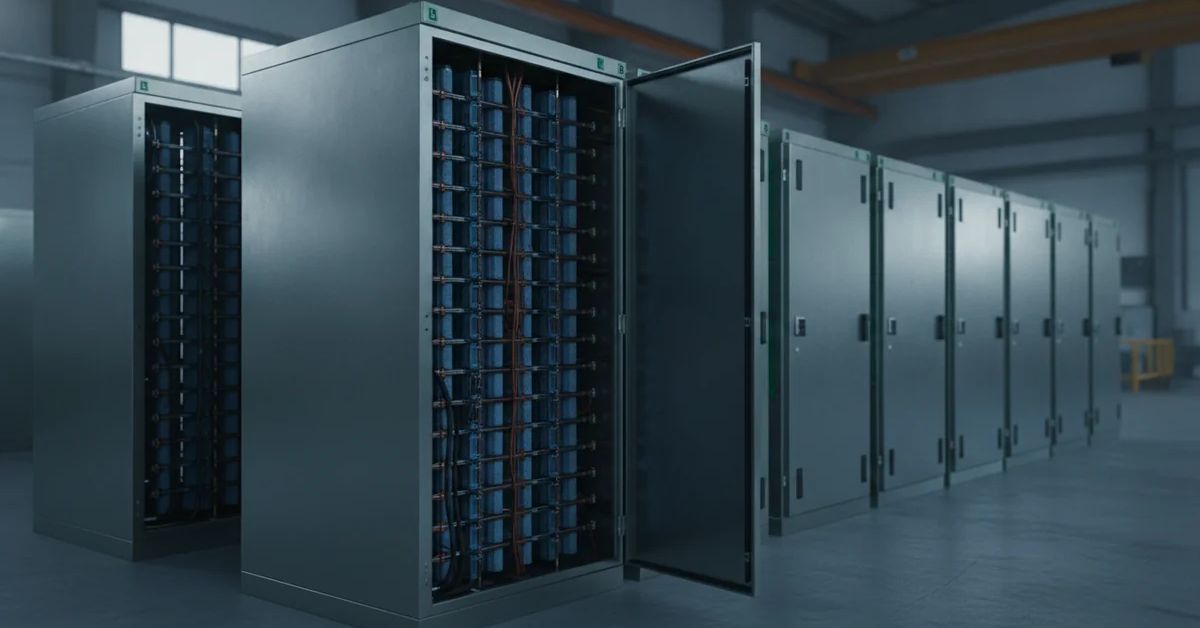
ESS Tech recently introduced ESS Bridge, a modular 1.2-MWh sodium-ion battery system designed to provide continuous energy discharge for up to 16 hours or more. The solution targets growing demand from utilities, renewable energy projects and AI-powered data centers.
ESS Tech Expands Sodium-Ion Energy Storage
ESS Tech spent more than a decade commercializing iron flow battery technology before entering the sodium-ion market. While its long-duration battery systems demonstrated strong performance, the company struggled to compete against rapidly expanding lithium-ion deployments.
The company’s stock has declined significantly since its public listing in 2021. However, executives believe sodium-ion technology offers new growth opportunities as demand for safer and more reliable energy storage continues to increase.
ESS Tech CEO Drew Buckley said the new ESS Bridge platform is designed to meet the evolving energy requirements of utilities and modern data centers. The company views sodium-ion batteries as a stronger alternative for demanding AI workloads.
Growing electricity consumption from artificial intelligence applications is increasing pressure on power grids. ESS Tech believes sodium-ion technology can deliver reliable performance while supporting future energy infrastructure expansion.
Why Sodium-Ion Batteries Are Gaining Attention
Supporters of sodium-ion batteries highlight their improved safety compared with lithium-ion systems. The technology is significantly less vulnerable to thermal runaway, reducing the risk of overheating and large-scale battery fires.
This advantage has become increasingly important following several high-profile battery storage incidents. Safer battery chemistry could help utilities improve system reliability while lowering operational risks.
Sodium-ion batteries also perform effectively across a wide range of temperatures. Their ability to use air-cooling systems instead of liquid cooling reduces maintenance requirements, improves efficiency and lowers long-term operating costs.
These characteristics make sodium-ion batteries attractive for grid-scale storage projects where safety, durability and cost efficiency remain critical priorities.
Read : Tiny GLP-1 Implant May Boost Long-Term Weight Loss
Supply Chain Benefits Support Future Growth
Another major advantage of sodium-ion technology is supply chain stability. Sodium is abundant across North America, reducing dependence on imported raw materials commonly used in lithium-ion battery production.
Manufacturers also face fewer geopolitical risks because sodium-based supply chains rely less on overseas suppliers. This provides greater energy security for utilities, businesses and government infrastructure projects.
Despite these benefits, sodium-ion batteries still trail lithium-ion systems in production capacity and market adoption. Their lower energy density means larger installations are required to achieve equivalent storage capacity.
As manufacturing scales and technology continues to improve, sodium-ion batteries could become an increasingly important solution for long-duration energy storage, renewable integration and the growing power demands of AI-driven industries.