Severe driver shortages are becoming a major challenge for freight and logistics industries worldwide. While countries like the United States face labor shortages due to population constraints, India is also struggling despite having one of the world’s largest populations.
According to the World Bank, India faces a shortage of nearly 22 lakh skilled drivers. Younger generations are increasingly avoiding commercial driving jobs because of demanding work conditions, long hours, and limited social appeal.
This growing labor gap is increasing transportation costs and causing delays in freight movement. Idle trucks and disrupted supply chains have pushed industries to search for more sustainable operational models.
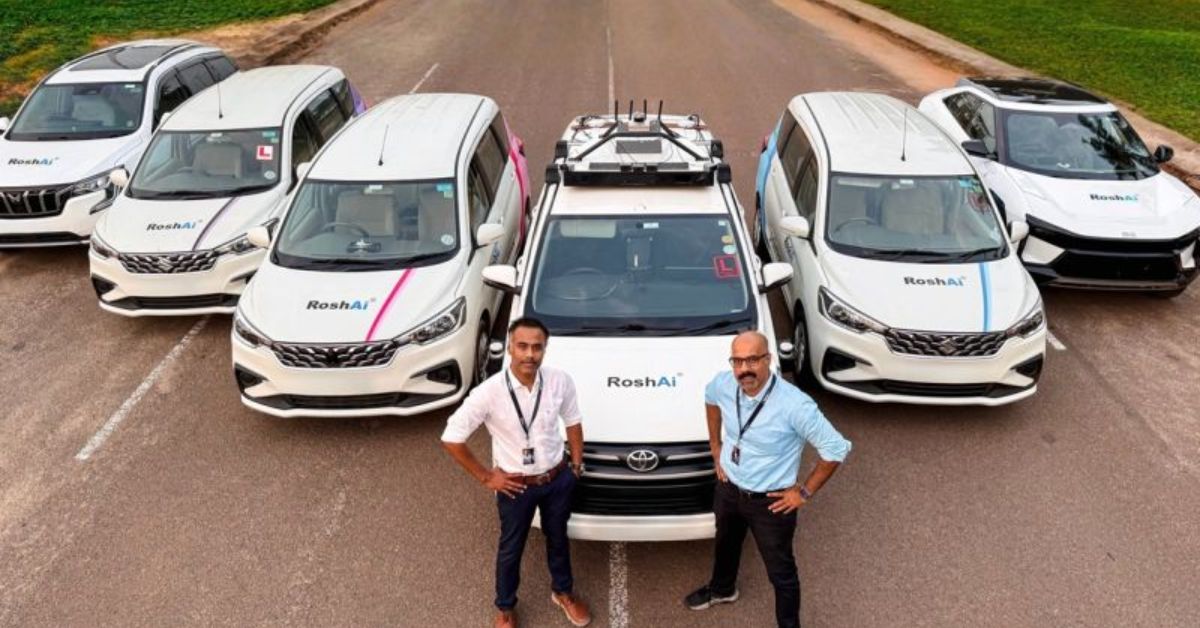
It was during the Covid-19 pandemic that RoshAi identified a major opportunity in autonomous industrial mobility. The startup’s founders realized their driverless technology could solve critical logistics problems beyond passenger vehicles.
RoshAi Expands Autonomous Technology for Industrial Fleets
Founded in 2021 by Roshy John and Rajaram Moorth, the company spent nearly a decade developing autonomous vehicle prototypes before entering industrial automation.
RoshAi now provides retrofit-ready hardware, AI-powered driving software, and a cloud-based fleet management platform. Together, these systems enable Level 4 autonomous operations for mining trucks, industrial vehicles, and boats.
Instead of purchasing entirely new fleets, companies can retrofit existing ICE and electric vehicles with RoshAi’s autonomous technology. This reduces both capital investment and dependence on human drivers.
The startup says its technology becomes more cost-effective than employing drivers when amortized over five years. This economic advantage is becoming increasingly attractive as global driver shortages continue to worsen.
From Tata Nano Prototype to Global Industrial Clients
RoshAi’s journey began in 2013 after John experienced a dangerous incident involving an exhausted taxi driver. The experience inspired him to explore autonomous vehicle technology using his robotics background and personal savings.
Working from his garage while employed at Wipro, John built an early autonomous prototype using a Tata Nano. He selected the vehicle because its rear-engine design simplified installation of steering and pedal automation systems.
At the time, sourcing advanced autonomous hardware in India was difficult. John imported LiDAR sensors from Germany years before such components became commonly available in the Indian market.
The prototype later evolved into testing systems for ports, airports, and industrial yards. These environments provided valuable real-world data for training and refining autonomous fleet technology.
Read : Why Hotels Are Adopting Unified PMS and POS Systems
AI-Driven Automation Moves Into Ports and Mining
RoshAi is now positioning itself as a broader autonomous fleet transformation company serving industrial sectors globally. The company works with nine major OEMs and clients across countries including the United States and Sweden.
Its technology is particularly suited for controlled industrial environments such as ports, mines, warehouses, and logistics hubs. These locations allow autonomous systems to operate more predictably than public road networks.
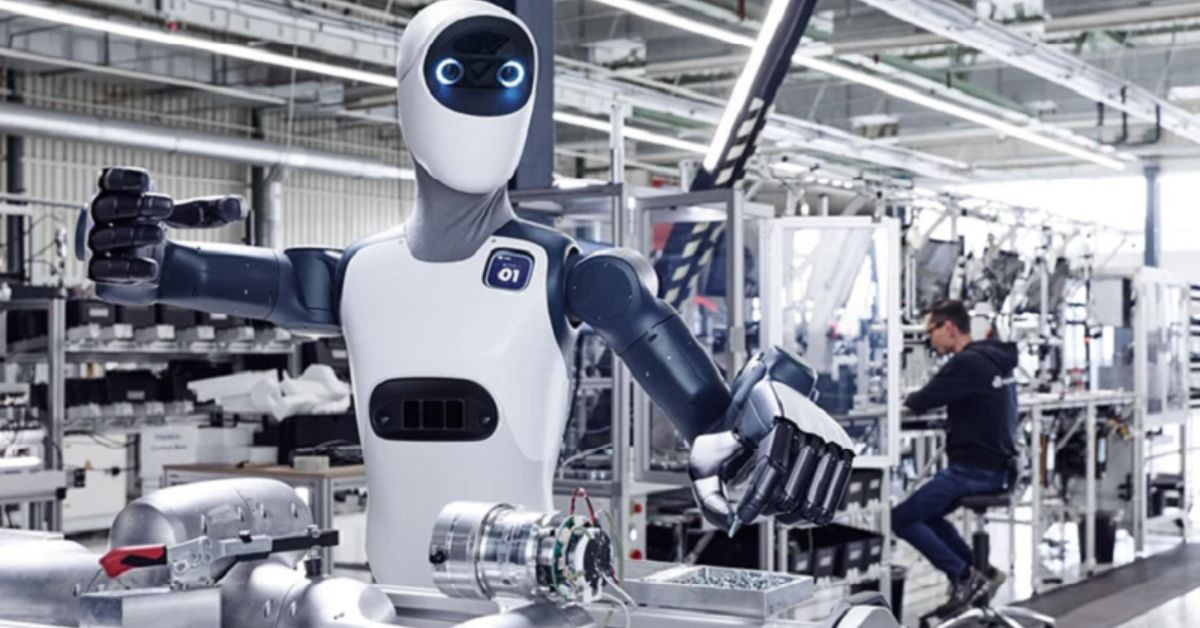
Beyond transportation, RoshAi is also expanding into precision manufacturing and electronics. Its AI software can automate repetitive industrial processes using years of operational training data.
The company has raised $3.4 million in funding, including a recent $2.4 million round led by IAN Alpha Fund. Other investors include Ev2 Ventures, Caret Capital, and Thinkuvate.
As industries increasingly adopt physical AI and autonomous systems, RoshAi represents a growing trend toward automation in heavy industrial operations where labor shortages and operational efficiency are becoming critical challenges.