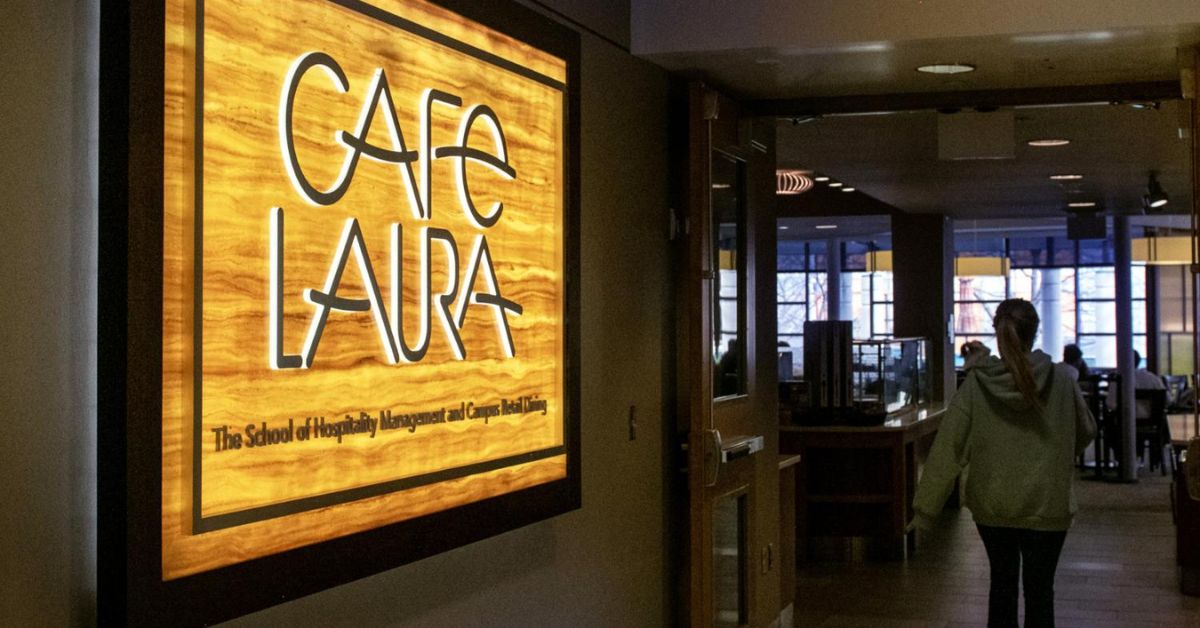
While pursuing a Master of Professional Studies in Hospitality Management, Faisal Alhoymany has gained hands-on experience at Cafe Laura, a student-run restaurant at Penn State. This environment provides real-world exposure to operations and strategy. It allows students to apply theoretical knowledge in a practical setting.
In this live service setting, Alhoymany works with Tray-C, a service robot designed to assist with repetitive tasks. The robot helps transport items like dirty plates, improving operational efficiency. His role involves optimizing how the robot fits into daily workflows. This includes analyzing its movement, placement, and interaction with staff and guests.
Alhoymany focuses on how technology can enhance both efficiency and customer experience. By studying how Tray-C integrates into operations, he identifies ways to streamline processes. His work highlights the growing role of automation in hospitality. It also demonstrates how technology can complement human effort.
His career goal is to pursue a leadership role, particularly in revenue management. He believes his experience with service robots gives him a competitive edge. As the industry adopts more technology, such skills are becoming increasingly valuable. This hands-on exposure strengthens his strategic perspective.
How Technology Is Transforming Hospitality Operations
The hospitality industry is expected to face significant labor shortages in the coming years. Service robots are emerging as a solution to address this challenge. They help reduce repetitive tasks and improve overall efficiency. This allows staff to focus more on delivering quality guest experiences.
Robots like Tray-C are particularly useful in high-volume environments. They streamline operations by handling routine tasks consistently. This reduces physical strain on employees and improves workflow. As a result, businesses can operate more smoothly.
However, successful implementation depends on how well the technology is integrated. Employees must view robots as supportive tools rather than replacements. Clear communication and training are essential for building trust. This ensures that technology enhances rather than disrupts operations.
Alhoymany emphasizes that workflows should not be redesigned entirely around robots. Instead, technology should fit into existing systems to improve efficiency. This balanced approach helps maintain operational stability. It also maximizes the benefits of automation.
Applying AI and Strategy in Real-World Settings
At Cafe Laura, Alhoymany applies his academic learning directly to real operations. His coursework includes revenue optimization and the use of AI in decision-making. These skills help him understand how data can drive better business strategies. Practical application reinforces classroom concepts.
He has learned the importance of analyzing the full operational picture. Rather than focusing on isolated issues, he considers how different elements interact. This holistic approach leads to more effective problem-solving. It also supports long-term strategic planning.
The master’s program provides a strong foundation for leadership development. It equips students with tools to assess operations and implement improvements. The curriculum aligns with current industry trends, ensuring relevance. This prepares graduates for evolving challenges in hospitality.
Overall, the combination of education and hands-on experience positions Alhoymany for future success. His work with technology and strategy reflects the direction of the industry. As hospitality continues to evolve, such skills will be in high demand. This experience sets a strong foundation for a leadership career.
Read : US Jury Finds Ticketmaster, Live Nation Illegal Monopoly
Preparing Future Leaders for a Tech-Driven Industry
The flexibility of the master’s program allows students to tailor their learning to their interests. Supportive instructors help guide students toward their career goals. This personalized approach enhances the overall learning experience. It also ensures students gain expertise in relevant areas.
Exposure to real-world challenges helps students build confidence and adaptability. Working in a live environment prepares them for industry demands. They learn to manage operations, solve problems, and think strategically. These skills are essential for leadership roles.
Technology continues to reshape the hospitality sector at a rapid pace. Future leaders must understand how to leverage tools like AI and robotics effectively. Programs like this help bridge the gap between education and industry needs. They prepare students for a tech-driven future.
By combining innovation with practical experience, students can drive meaningful change. Their ability to integrate technology into operations will define success. As the industry evolves, leaders with these capabilities will stand out. This makes such educational experiences highly valuable.