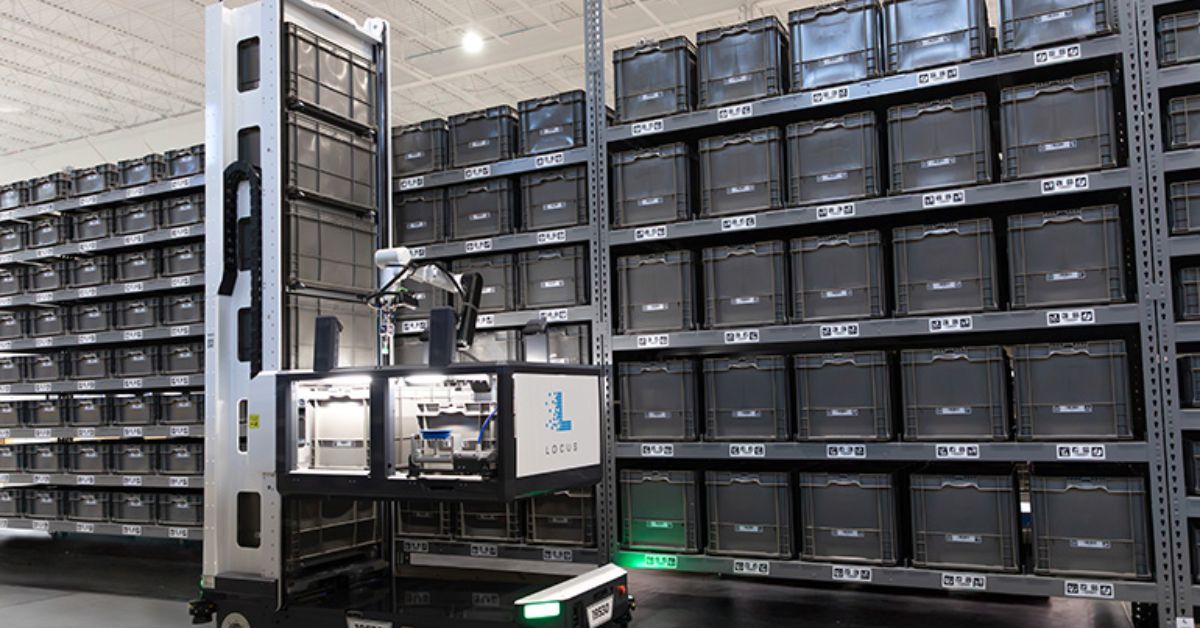
Deployments of Locus Array are already underway with early access customers in North America, as Locus Robotics prepares for global expansion across Europe and APAC. The rollout reflects rising demand for fully autonomous warehouse fulfillment solutions. Companies are increasingly seeking systems that can handle operational complexity at scale.
“For years, autonomous fulfillment has been more hype than reality – until now,” said Rick Faulk. He emphasized that warehouses face growing pressure from labor shortages, rising costs, and operational variability. Traditional systems often struggle to adapt to these challenges. Locus Array is designed to address these issues through a system-level automation approach.
Warehouse operators are now looking for smarter, scalable technologies that go beyond incremental improvements. The need for flexibility and efficiency has never been greater in modern supply chains. Locus Array introduces a new way to manage fulfillment operations with minimal disruption. It aims to transform how warehouses handle increasing demand and complexity.
Early Adoption and Industry Impact
Among the early adopters is DHL Supply Chain, a long-time partner of Locus Robotics. The company has already implemented Locus Array in live operations. This deployment represents a major milestone in DHL’s digital transformation journey. It signals a shift toward more advanced and scalable automation systems.
According to Sally Miller, the launch marks a move beyond traditional assisted picking into high-density, autonomous fulfillment. She highlighted the importance of scalability in turning innovation into operational success. The partnership demonstrates how advanced robotics can be applied at a global level. It also reinforces DHL’s focus on building agile and resilient supply chains.
The system allows warehouses to maximize vertical space and significantly reduce manual processes. This leads to improved efficiency and faster order fulfillment. It also ensures consistent performance, which is critical for meeting customer expectations. As a result, companies can maintain competitiveness in a fast-evolving logistics landscape.
Key Features Driving Autonomous Fulfillment
Locus Array enables high-density throughput by processing orders in parallel and consolidating tasks directly within warehouse aisles. This capability allows operations to run continuously, improving productivity and efficiency. The system supports 24/7 performance without requiring major infrastructure changes.
It also automates multiple workflows, including picking, putaway, replenishment, and more. By reducing manual labor by up to 90%, it significantly lowers operational costs. The solution can be deployed quickly, often within weeks, making it highly practical for modern warehouses. This rapid implementation reduces downtime and accelerates return on investment.
Additionally, Locus Array offers flexible scalability, adapting to changing layouts, inventory, and demand patterns. It works seamlessly with other robotic systems to create a unified automation ecosystem. This coordinated approach ensures smooth operations across all fulfillment processes.
Read : Citi Launches AI-Powered Adviser for Wealth Clients
Robots-to-Goods Model and Future Innovation
The introduction of Locus Array brings a new automation model known as Robots-to-Goods (R2G). In this approach, robots move directly to inventory instead of transporting goods through fixed systems. This reduces unnecessary movement and improves overall efficiency.
Unlike traditional automation, R2G systems dynamically assign tasks in real time. This ensures optimal use of resources and continuous availability of inventory. It also enables higher storage density without requiring major facility redesigns. The result is a more agile and responsive warehouse environment.
Powered by the LocusONE platform, the system coordinates robots, workflows, and inventory seamlessly. This AI-driven orchestration allows operations to scale efficiently over time. As demand fluctuates, the system adapts to maintain consistent performance. This innovation positions Locus Robotics at the forefront of next-generation warehouse automation.