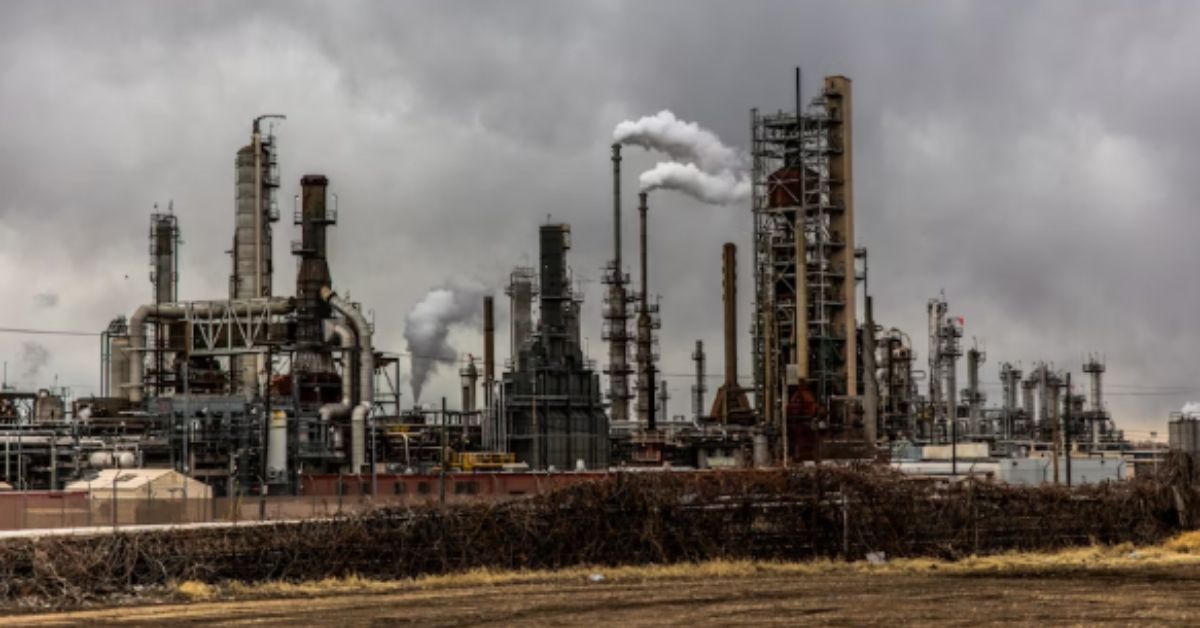
Kazakhstan’s largest oilfield, Tengiz, is expected to restore less than half of its typical crude oil output by February 7 as it recovers from a recent fire and power outage, according to people familiar with the matter.
The fire on January 18 at a power generation unit triggered a nationwide shutdown of production at both the Tengiz and nearby Korolev oilfields, leading Tengizchevroil (TCO) – the Chevron-led operator – to temporarily halt operations.
Although some production has resumed, the pace of recovery remains slow, and TCO has not yet lifted a force majeure declaration on CPC Blend crude shipments.
Read: Bain & Palantir AI Partnership for Clients
Output Projections and Export Impacts
Sources familiar with the situation estimate that by February 5, Tengiz could produce about 260,000 barrels per day (bpd) – only around 26% of its usual capacity. By February 7, output might rise to roughly 570,000 barrels per day, still less than half of normal production.
Another industry source suggested production could climb further to around 670,000 bpd by mid-February, but that would still fall short of the nearly 900,000 bpd reached in early 2025.
Tengiz is crucial to Kazakhstan’s oil exports, with most of its crude shipped through the Caspian Pipeline Consortium (CPC), which handles about 80% of the country’s total exports.
The extended slowdown is expected to curb Kazakhstan’s overall oil output, potentially reducing January national production to an average between 1 million and 1.1 million bpd, down from the typical 1.8 million bpd.
Efforts to Accelerate Restoration and Future Concerns
In response to the disruption, Kazakhstan’s Prime Minister Olzhas Bektenov met with ExxonMobil’s vice president, Exxon being a 25% stakeholder in TCO, urging expedited repair and improved preventive measures to avoid future outages.
Oilfield recovery challenges are compounded by the technical complexity of Tengiz, one of the world’s deepest supergiant fields, making rapid restoration more difficult. The extended period of reduced output may continue to weigh on export schedules and contribute to broader supply pressures in global crude markets.