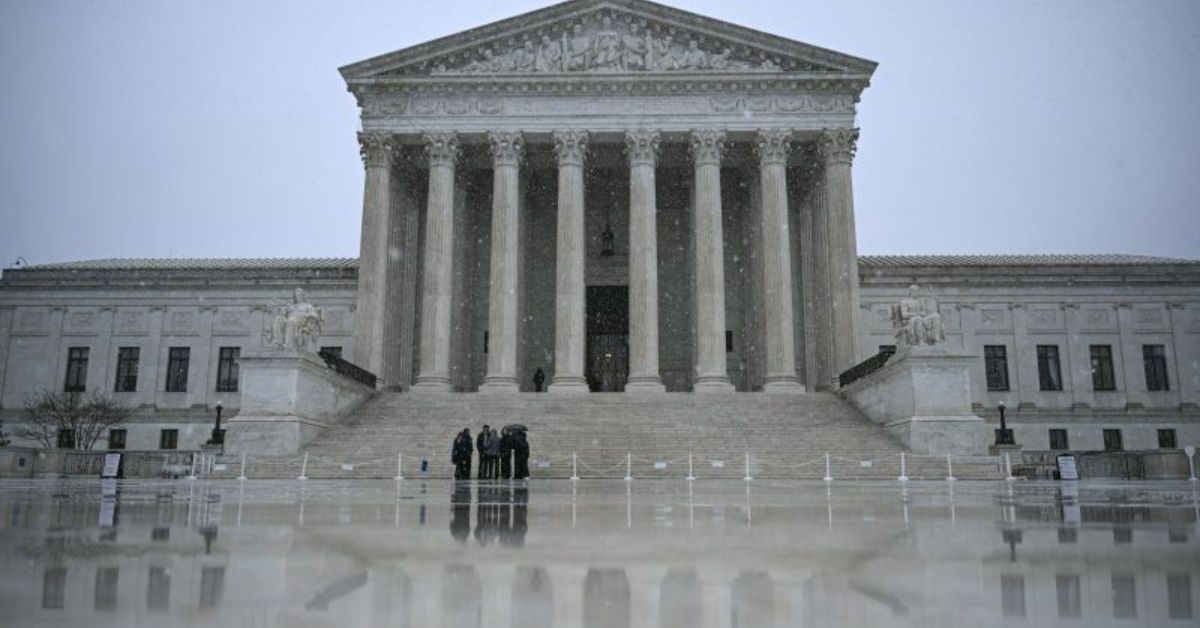
On Monday, the U.S. Supreme Court heard oral argument in a defense of a Mississippi state law permitting a 5-day grace period to count mailed ballots despite the fact they have already been received after the election. The case might influence the future voting regulations in the country.
The administration of Donald Trump is in support of the challenge. The Mississippi statute has allowed ballots mailed on or before the Election Day to be counted provided that they are received within five business days.
The state of Mississippi was attractive since it was found by a lower court that the law was unlawful. The case concerns whether the federal regulations of Election day take precedence over state regulations permitting late receipt of ballots.
The court that was dominated by conservatives brought up wider concerns during arguments. Justices challenged several issues related to the mail-in voting such as deadlines and the mail-in handling of ballots.
Supreme Court Scrutiny Could Reshape Mail-In Voting Rules
In early 2026, Trump has vowed to halt extensive mail in voting by 2026 mid term elections. His stand represents a broader Republican skepticism of mail-in ballots. New legislations are being considered by the congress that could restrict rules. Amendments that would be made would include the use of photo ID that is issued by the government to vote by mail.
According to Republicans, such rules are necessary to make elections fair. Claims of a mass of fraud are however few, despite the ongoing allegations.
Currently, approximately 30 states and Washington, D.C. tabulate ballots that were postmarked during the Election Day, though received afterwards. This depicts that the U.S. does not have a stable mail-in voting rule.
Justices Debate Legal and Constitutional Boundaries
At the hearing, Justice Neil Gorsuch questioned why there is a discrepancy in the definition of a submitted ballot. He doubted the official submission using a carrier to send a ballot.
Republican National Committee and the Mississippi Republican Party were some of the groups that brought the lawsuit. They desire the invalidation of the law of the state.
It is also stated that Elena Kagan contended that federal law could provide states with flexibility in regard to ballot deadlines. Her comments implied the contrary about election power.
Justice Samuel Alito cautioned that the ballots arriving late may cause a lack of faith in the elections, which might alter the outcomes and cast doubt on the results.
Read : Top Mobile Security Risks and How to Protect Data & Profits