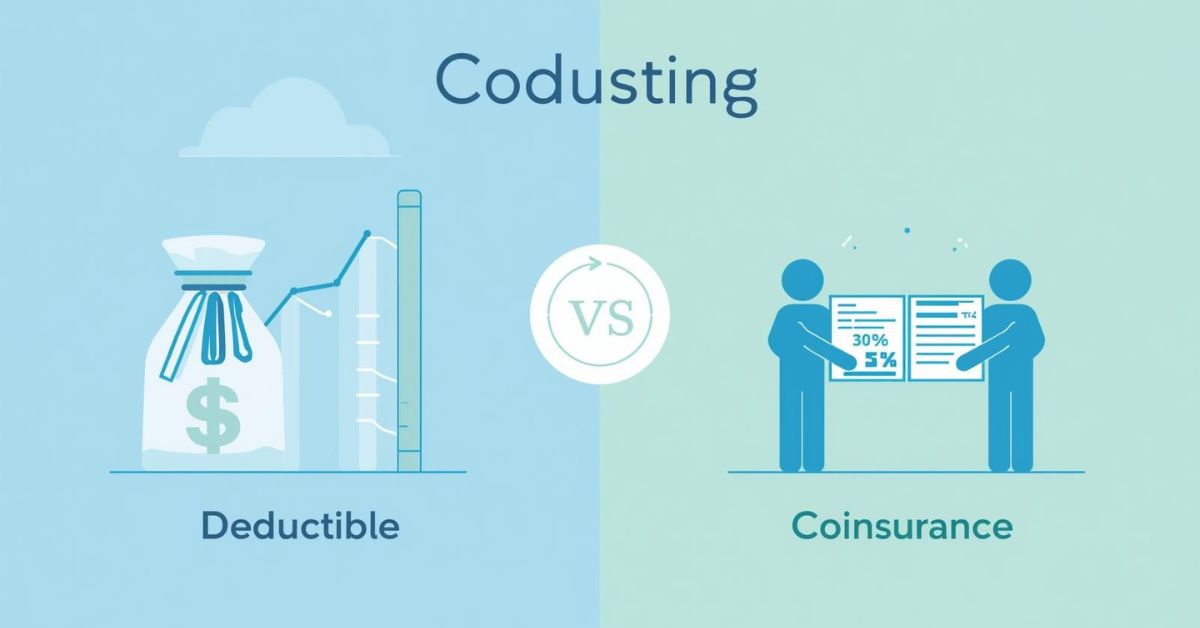
Health insurance is full of confusing terms. Two of the most essential terms people struggle with are deductible and Coinsurance. To understand your policy clearly, you must know the Difference between Deductible and Coinsurance. These two simple terms decide how much you pay from your pocket during a medical emergency and how much your insurance company will pay.
In this easy-to-understand guide, I explain everything in simple English so that even a 15-year-old can understand. You’ll learn what deductible means, what Coinsurance means, why both exist, and the significant Difference between Deductible and Coinsurance with examples.
This article uses a friendly tone, active voice, and SEO-friendly structure to help you rank #1 on Google.
What Is a Deductible in Health Insurance?
A deductible is the fixed amount you must pay from your pocket before your insurance company starts paying your medical bills. Think of a deductible as your personal contribution toward the cost of treatment. After you pay this amount, your insurer begins covering the remaining expenses under the policy.
Example of Deductible
If your deductible is $500 and your hospital bill is $6,000:
-
You pay $500
-
The insurance company pays $5,500
Until you meet the deductible amount, the insurer will not pay anything.
Deductibles help reduce small claims, stop misuse of health insurance, and keep premiums affordable. Understanding deductibles is the first step to understanding the Deductibles vs Coinsurance.
Read: BNP Paribas Updates Core Capital Target for Investors
What Is Coinsurance in Health Insurance?
Coinsurance is the Percentage of the medical bill you must pay after your deductible is met. Instead of a fixed amount, Coinsurance is always a percentage. It is cost-sharing between you and your insurer.
Example of Coinsurance:
If your coinsurance is 20% and the total bill after deductible is $5,000:
-
You pay 20% of $5,000 = $1,000
-
Insurance pays $4,000
Coinsurance usually appears in health insurance policies after you have already paid your deductible. It helps share long-term medical expenses between the patient and the insurer.
Coinsurance plays a significant role in the Deductible vs Coinsurance, because one is a fixed amount while the other is a percentage.
Difference Between Deductible and Coinsurance
To understand the Difference between Deductible and Coinsurance, imagine the medical bill in two parts:
- Deductible – The amount you pay first
- Coinsurance – The Percentage you pay after the deductible is met
They are connected but not the same.
Key Difference Between Deductible and Coinsurance
Here is the Difference between Deductible and Coinsurance in the simplest possible way:
- Deductible = Fixed amount you pay before insurance starts
- Coinsurance = Percentage you pay after insurance starts
Deductible is usually paid once per policy year.
Coinsurance applies to every claim after the deductible is satisfied.
This is the core Coinsurance vs Deductible, and understanding this helps you calculate how much you’ll pay during medical treatment.
Deductible vs Coinsurance Example
Let’s say:
-
Total medical bill: $10,000
-
Deductible: $500
-
Coinsurance: 20%
Step-1: You pay your deductible
You pay: $500
Remaining bill: $9,500
Step-2: Coinsurance applies
You pay: 20% of $9,500 = $1,900
Insurance pays: $7,600
Total you pay:
$500 + $1,900 = $2,400
This example clearly shows the Difference between Deductible and Coinsurance and how they work together.
Why Do Health Insurance Companies Use Deductibles and Coinsurance?
Insurance companies use these two terms to share the medical cost with you. They want you to pay a small portion to prevent misuse and encourage responsible healthcare decisions.
Understanding why these exist will help you know the Coinsurance vs Deductible, because both serve different purposes.
1. To Reduce False or Small Claims
If people didn’t have deductibles or Coinsurance, they might file claims for small medical expenses, such as $200–$500. That would dramatically increase premiums for everyone. Deductibles filter out small claims. Coinsurance helps prevent people from overusing expensive treatments.
2. To Keep Insurance Premiums Affordable
Deductibles and Coinsurance help insurance companies control costs. When customers share part of the bill, the insurer can offer lower premiums. This is one of the most significant benefits of the Difference between the Deductible and Coinsurance system.
3. To Encourage Responsible Behavior
When you know that you must pay a fixed amount (deductible) and a percentage (Coinsurance), you become more aware and responsible. People avoid unnecessary hospital visits and make informed health decisions.
4. To Share Risk Fairly
Without deductibles and Coinsurance, insurance companies would have to increase premiums heavily. Cost-sharing makes the system fair for everyone. This fairness highlights the practical Difference between Deductible and Coinsurance.
How Deductible Works in Real Life
Understanding real-life situations makes the Difference between Deductible and Coinsurance easier to grasp.
Example-1: Minor Surgery
-
Total bill: $2,500
-
Deductible: $500
You pay $500
Insurance pays $2,000
Example-2: Yearly Deductible
If your annual deductible is $1,000, you pay this once per year. After that, insurance covers all eligible claims (except coinsurance).
Deductibles bring structure to your insurance policy and create a predictable cost-sharing model.
How Coinsurance Works in Real Life
Coinsurance applies after the deductible. This makes the Difference between Deductible and Coinsurance very clear.
Example-1: Hospitalization
-
Remaining bill after deductible: $8,000
-
Coinsurance: 10%
You pay $800
Insurance pays $7,200
Example-2: High Medical Bills
If your bill is $50,000 and your coinsurance is 10%, you pay:
10% of $50,000 = $5,000
Advantages of Deductibles
- Lowers your yearly premium
- Reduces small, unnecessary claims
- Controls misuse of insurance
- Encourages responsible healthcare spending
Disadvantages of Deductibles
- Higher upfront payment
- Not ideal for people with frequent medical needs
Advantages of Coinsurance
- Splits the cost between the insurer and the customer
- Helps insurers keep premiums low
- Reduces overuse of expensive treatments
Disadvantages of Coinsurance
- The percentage cost may increase with larger bills
- Can cause financial stress during big claims
Which Is Better for You – Low Deductible or Low Coinsurance?
Your choice affects your budget and long-term savings. Understanding this helps reinforce the Difference between Deductible and Coinsurance.
Choose Low Deductible If:
- You expect frequent claims
- You have ongoing medical conditions
- You want to avoid high initial payments
Choose Low Coinsurance If:
- You want predictable long-term costs
- You want more coverage after the deductible
- You want protection from massive medical bills
Common Myths About Deductible and Coinsurance
- Myth-1: Deductible and Coinsurance Are the Same
- Myth-2: Higher Deductible Is Bad
- Myth-3: Coinsurance Always Means High Costs
Conclusion
The Difference between Deductible and Coinsurance helps you understand how much you will pay during a medical emergency. A deductible is a fixed amount you pay first, while Coinsurance is a percentage you share after crossing the deductible. Both protect the insurer and keep your premium affordable.
When you understand the Difference between Deductible and Coinsurance, you can choose the best health insurance plan, avoid financial stress, and plan your healthcare expenses better.